
by admin | Jan 31, 2016 | Customers/Examples, Food Beverage, Technical
Theory and background are important, but now it is time to really begin printing your labels! You need to have the background work done – read more about that in a previous post by clicking here. Once you have laid the foundation and you have a solid brand, it is time to dive into the details of getting your perfect labels printed. Follow the path laid out here, and you will be able to select the correct label technology for your project.
If you believe your new food, beverage, tool or gadget is really going to make people happy or improve their lives, you owe it to the world to get your product out there – don’t keep it to yourself. Go out and make it happen today.
-
How Complex and How Stable is Your Design?
If you have a full color or photographic design, then digital and conventional printing are both very good options. If your design is more of a classic, simple layout, like a traditional wine label printed with one or two colors, then you will have a cost advantage with traditional press printing – more colors mean more cost on a traditional press. How likely are you to revise your design on the next run? If you aren’t in love with the design, this will lean you toward the digital production option because there are no setup fees and no penalties for changing the design on your future orders. Simple design? Consider traditional press. Very rough, unstable design? Lean toward digital printing.
-
How many labels can you commit to right now?
The more labels you buy, the cheaper they will be – this is true across all print platforms. Sometimes it makes sense to select a fixed budget – ‘how many labels can I get for $700?’, but sometimes it makes more sense to base the quantity on your sales projections, or your batch quantity for production of your beer, wine, or peanut butter. We never recommend buying more than a year’s supply of labels – buying more than this, generally, won’t lower your cost that much but it will add more risk of wasting labels – in case you move, change ingredients, or decide you want to give your labels a facelift. Depending on the quantity you decide on, smaller quantities generally tend to favor digital production options. The size of the label weighs on this decision too, but in most cases, 50-1000 labels should be printed on our Economy Digital platform, 1,000 to 10,000 labels belong in our Premium Digital department, and initial orders over 10,000 labels run best on our Traditional Press area.
-
Do you need metallic inks, perforation, special adhesive or other special operations?
Traditional press printing is still 70% of our business, despite the rapid growth of digital. Because of this, we have many more material choices in the traditional press department – both label materials and adhesives. We also have many, many more standard cutting dies available. Metallic inks, inline embossing, perforation, top scoring, and many other special operations are ONLY available on the traditional press. Finally, because the press is so much larger and faster, the very lowest cost labels will always be produced on the traditional printing press in almost all cases.
-
Do you want to add ‘bling’ like embossing or foil stamping?
Once you have decided on the primary printing technology, you get to look at the dessert menu. What do you want to add onto the top of the beautiful label you just produced? With our state of the art foil and embossing equipment, we can add a little extra ‘spice’ to any label – regardless of which press technology was used to print it. Embossing and foil stamping make a label ‘pop’ and stand out on the shelf. These secondary operations aren’t for everyone, and they aren’t cheap, but they do give a dimension to your product that you can’t get any other way. Maybe you have a full line of food, beverage, or consumer products? Consider embossing or foil stamping for your top tier product – the Private Reserve level – this will make it stand out, but still remain obviously recognizable as a part of your product family.
-
That’s It – Go Make it Happen!
Once we have the printing technology selected (Economy Digital, Premium Digital, or Traditional Press) and we have confirmed the need for secondary upgrades (adding the ‘bling’), we are ready to submit an order! All orders are quoted and confirmed within 48 hours. PDF proofs are sent back within 3 business days. After PDF approval, typical lead time is about 7-9 working days. That’s it! Your product is ready to be released to the world – go out and make it happen. If you believe your new food, beverage, tool or gadget is really going to make people happy or improve their lives, you owe it to the world to get your product out there – don’t keep it to yourself. Go out and make it happen today.
More questions? No problem – we can help. Follow this checklist and you will be on your way to making the right decisions, but don’t be afraid to ask for help along the way. We do this every day, so we have many more ideas to help you launch your product with great success.

by admin | Jan 21, 2016 | Beer Wine Spirits, Business Tips, Food Beverage, Label News
Nobody likes a hard project – we all prefer EASY. Luckily there are a handful of proven, easy ways to improve your labels. These are low cost strategies to make sure you get the very best outcome with your next label project – all they require is a little planning and thought. And, once you adopt these strategies, they can be applied to ALL your future label projects – they will all benefit from these 6 easy tips.
1.Market – Who are We Selling To?
Your target audience is the first thing you want to consider when you are creating a new product. This applies to the product itself, as well as the label, the website, the sales channel, and may other aspects of your business. The customer is the reason for your product’s existence. Take the time to define, narrow, and validate the ideal customer you are targeting. Based on that, your label design will follow – are you upscale and corporate? Small batch organic? Hand made or mass produced? Sold online or at Farmer’s markets? All of these questions must be answered to get the best possible label for your product.
2.Begin with the End in Mind (is it a bag, box, or bottle?)
Now that the market is defined, and assuming your product is fully developed, start thinking about the package itself. Will you sell in brown glass, clear glass, plastic bags, or corrugated boxes? The container, and the size of the container, have a huge impact on what type of label will work best. Durability is also a key question here- are the products used outdoors? Are they shipped long distance? What is the expected useful life of your product – a 2 gallon warehouse store package is much different than a single serve bottle. Consider what the label is applied to, and how long it needs to last, as early in the conversation as possible.
3.How Will They Get on the Container?
With the brand, the product, and the package nailed down, think about the physical production of the product. Are you using a contract packager? A mobile bottler? Or are you making it in small batches at home. (And if you are making it at home, where to you want it to scale to?). All these questions are critical, because they determine how the labels must dispense. Nearly all the labels we produce are on rolls – but what orientation on the roll (right edge off first, bottom off first) and the roll size and core size can be major stumbling blocks if they aren’t addressed up front. We can accommodate almost anything, but we need to know about it early in the process. Think through this decision as early as possible – even if you are just deciding how you will set up your home kitchen to label Mama’s famous spaghetti sauce.
4.Quantity and Variety
How much of your amazing sauce do you expect to sell? We recommend buying a 6-12 month supply – this will give you a good volume price discount, but won’t burden you with excess cash tied up in inventory. The more you buy of a given label – the lower the cost per piece – that is pretty obvious, but it has to be balanced with the risk of a product revision. Obsolete labels are worthless and a bad decision, no matter what price break you got – it doesn’t matter when they are in the garbage can. Also, what about differe3nt flavors? Sizes? or other product variations… If you can group multiple products together, with the same label size, you can get great economies of scale. This ‘bulk order’ could include multiple versions of the same label – this is a great way to test market – or it could include multiple distinct products – spicy, medium, and mild for example.
5.Budget
The other way to arrive at quantity and variety is to establish a budget. This is especially useful if you have a new product with no sales history. How much have you set aside for labels? If that is $500, or $1,000 or whatever it is, we can help you back into the best strategy to get the most label value for your fixed investment dollars available. This is especially true if you have answered the other questions in this article- armed with that information, it is easy to decide the best label choice for your product. This can also be approached from the ‘cost per label’ budget perspective. If your product cost (and sale price and profit) have to come in at a certain level, we can figure out how many labels you will have to purchase to hit that unit cost – this may also influence the design and complexity of the label if we are shooting for a certain price point
6.Future Expansion of the Product Line
Usually the first step is just getting your first order placed – or moving over to a vendor that understands your needs – and getting the project off the ground. BUT – it makes sense to think about the long term as early as possible. Where do you want to be? What is the expansion strategy? If all goes well, where do you want to be in 5 years? How many products? Sold in what locations? Think about this and how it may affect your label design. We have to focus on the ‘now’ but we can’t ignore the big picture.
NOTHING About Label Equipment or Technology!
Notice that none of the steps here have anything to do with ink, paper, foil, or die cutting. Those are very important, and we live those every day, but they aren’t the right place to start. We offer a full like of label printing – from simple to complex, and from small to large runs. We have ALL the tools, but we need to have these questions answered first before we can recommend a specific technology solution. Don’t worry about size, shape, or price until you have a clear idea of where you are going. Use these steps to chart your course, and you will be successful. In a future post I will discuss the next steps = applying the specific label production methods to solve specific problems – but first you need to clearly define the problem. With that, you are half way to the solution.
by admin | Jan 8, 2016 | Beer Wine Spirits, Business Tips, Food Beverage
In Oregon, we love to root for the underdog. Rather than large corporate, we value local and support local business. That’s one reason why Oregon’s local micro brewing industry has done so well and the good news is the benefit of Oregon’s mindset doesn’t stop at beer.
Other small craft businesses can benefit from the support local mindset. One category which is enjoying growth is small, local food producers.
Celebrate Small – Don’t Hide It
When it comes to standing out of the shelf; Oregon is blessed with a thriving graphic design community, and vendors offer technology which allows today’s small producers to stand out on the shelf with eye-catching professional packaging that creates a bond between your consumer and your business. Oregon is in fact the perfect state to celebrate being small and to thrive while doing it.
It helps that you don’t need to be Goliath to have great label. Smaller companies are by their nature nimble, make changes more easily, and have adaptation and change built into their DNA. Smaller enterprises are often closer to the “local vibe” of the communities within which their products are sold. So, in terms of creating product and label design that resonates with your local market, being small can be a real advantage.
Your labels don’t have to look ‘small’
At Rose City Label, there’s nothing we love more than helping a smaller company fulfill their dreams. We take pride in every single label, knowing these labels are going to draw consumers in to pick up, and try your product and we’ve invested in the technology to print smaller runs cost effectively. It’s a real thrill to see these labels pop up in unexpected places as our client’s grow.
You don’t have to order millions for a good price
The best part of growing your business in Oregon, is that Oregon’s local vendors are experienced with working with smaller companies to help them succeed. At Rose City Label, we have increased our digital printing capabilities continuously over the last 5 years specifically to bring the cost of shorter print runs down, while increasing the flexibility we have to accommodate innovate design in shorter runs and maintain a great label you will be proud of.
It helps us be ready to help you – and we think that’s a great thing.
by admin | Dec 4, 2015 | Food Beverage, Label News
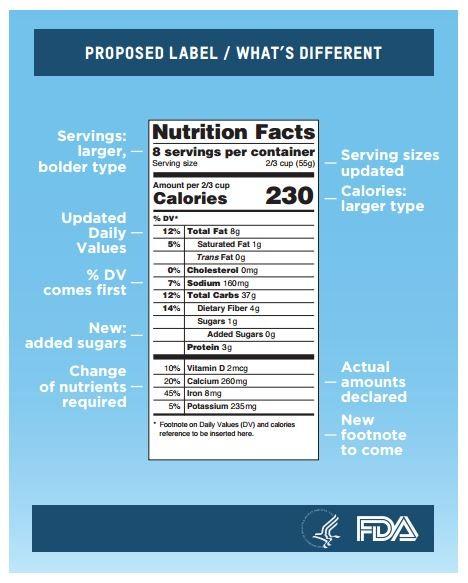
Changes are coming to the Nutrition Facts panel. We serve many different industries at Rose City Label and we are always trying to keep up with the latest trends in labels – both regulatory and design.
The FDA remains on track to update its nutritional labeling for individual food and beverage packaging. We anticipate the final version will be issued the first quarter of 2016, and that industry will need to come into compliance by January 1, 2018.
The most current version of the new label is here – please take note of these changes. They will affect all food label customers that are required to show Nutrition Facts on their labels.
What does this mean for you?
-
Partnering with a knowledgeable, experience printer is more important that ever
-
Many people will be changing their labels, so responsive service will be key
-
Plan for the change – there will be costs associated with this change, so please plan accordingly
-
Take the opportunity to review your graphics at the same time – does your label need a face lift?
-
Don’t know where to begin? Call us today – we can help.
Thank you for trusting Rose City Label with your label projects – we appreciate the faith and confidence you place in our team every day.
by admin | Oct 14, 2015 | Customers/Examples, Food Beverage
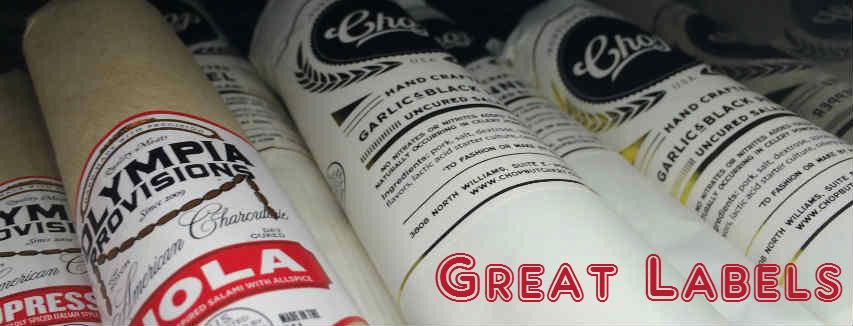
Two Great Customers – together in our favorite grocery store!
We are proud to support two excellent Portland salami companies with their labels. These companies are different in many ways, but they both need top quality labels, delivered on time, at a fair price. We have been happy to help both of these customers for many years.
Olympia Provisions has grown to a national power house with a spot on Oprah’s favorite things. They continue to grow and prosper as more and more people learn about these great products. It has been great to see them evolve since we printed their first labels in 2009.
Chop Butchery is more of a neighborhood butcher. They are all about the local community feel and they sell extensively at local farmer’s markets. ** UPDATE 2018 – sadly, Chop as stopped operating as a charcuterie but still maintains a deli inside another market in NW Portland. Call us if you want more information.
These two companies are at very different stages, but both rely on Rose City Label for their labels. Maybe we could help you too?
New Seasons Market – another customer we love to help – is the place to find these great meat products, along with all the other gourmet foods you may need.
Please support these good customers and let them know how much you like their labels! If we can help you build your brand and tell your story with outstanding labels, please call us today.

by admin | Sep 23, 2015 | Food Beverage
Labels to Reflect a High Quality Brand
The best part about our job is the amazing customers we get to work with. The passion the Coava Coffee team brings to work each day inspires us to do our best work for them.
Their coffee is wonderful, and they take the quality of their packaging very seriously. They engaged the services of Tyler and Nicole at Factory North to update their labels to reflect the quality of their product.
With no additional explanation, you can see that the labels are stunning, but the story behind them is even better.
The designers took the time to understand all the options – material, texture, embossing, print techniques, and the need to personalize each batch based on roast date.
With all these considerations, they made a very clean and cost effective design that will serve Coava for many years. Specific highlights:
- Uncoated Kraft Paper – this gives a feel of raw, natural, and organic product.
- Embossing common to all items – this keeps the cost down and still achieves the desired affect.
- Different ‘icon’ or badge to distinguish countries (see the red badge above)
- Unified colors for all items
- Special treatment for ‘Reserve’ or limited edition product lines
All of these items together make the impression Coava is looking for – hand crafted, small batch, exotic quality coffee from around the world. Thanks to Coava and Factory North for letting us be a part of this project.
