Your labels are important to you—and your customers. They’re often a customer’s first hands-on experience with your brand. Like the perfect clothing accessory, the perfect label sets off your product and gives it a polished, memorable look.
Here at Rose City Label, we understand how important this is to your business. We’re mindful of the fact that specific labeling needs often require different approaches to ensure the best possible result. We work hard to maintain a diverse portfolio of production options. This enables us to provide a consultative technique—we aren’t married to any one solution, except the one that is best for your particular label needs.
Our label printing technicians, with an average tenure of over 12 years each, comprise the most experienced production team in the Northwest. We pride ourselves on the ability to recommend the label printing solution that’s best suited to your product and to the project at hand.
Rose City Label has recently invested in digital printing equipment. This modern label technology is our fastest-growing department, and for some labeling needs, it really shines. However, it may not be right for every project. Depending on your needs, conventional printing may still be the best option.
We’d welcome the opportunity to help you determine whether traditional or digital label printing methods would best suit your needs, but considering a few factors should give you a good idea whether digital printing is ideal for you.
Short Label Run or Long?
Digital printing is ideally suited to a short label run. Run length refers to the linear footage of label stock running through a printing press. This will vary depending on the size of each label as well as the number of labels desired. The shorter setup on a digital press makes it an attractive option, both financially and environmentally.
For simplicity, we can advise that a run of around 3,000 feet or less may be a good candidate for this modern label technology. This can vary slightly depending upon the size of each label. Run length is not the only determining factor in deciding which technology to use, but it’s a good place to start.
Static or Variable Label Data?
Multiple versions of a label, such as different color combinations with the same print data, can often be done on a traditional press. However, making such a shift is usually easier—and more cost-effective—on a digital press.
Changing Data? Go Digital
This is perhaps the easiest consideration. If you need variable data, you need digital labeling. Dynamic data elements require that the job be printed on a digital press. Printing variable data such as serial numbers, fluctuating barcodes or numbered limited editions on a conventional press would most likely be cost prohibitive.
Trusted, Unchanging Label Designs
If your label design is mature, stable and unlikely to change, conventional printing methods may be more suited to your project. If your runs are medium to long length and your design is static, traditional printing technology may be the wiser choice. Once the initial plates and setup are in place, they can be used repeatedly on the conventional press without additional charge. For such a project, conventional print methods are likely to be less expensive than digital in the end.
Type of Stock Desired
If you desire an uncoated, textured label stock, digital printing has a clear advantage. Our HP Indigo digital offset press produces an exceptional result on uncoated stocks. The print quality and resolution is slightly better on the digital press. On some types of stock, the difference isn’t apparent. On others, it can be quite noticeable.
Metallic Inks, Die Cutting and Other Conversions
Perhaps digital label printing’s biggest weakness is that it doesn’t allow many options when it comes to converting. Converting refers to everything we do to produce a label, aside from putting ink on paper.
• Complex die cutting
• Back slitting
• Top scoring
• Perforations between labels
Options such as these are not available with digital label printing.
Additionally, digital runs produce labels in rolls as opposed to sheets. If you require certain conversions or need labels delivered in sheets, you’ll need to choose the traditional press for your project. Another popular feature—metallic ink—is not available when using the digital press.
When is Digital Label Printing Your Best Option?
There are many factors to consider when deciding which press to choose for your project. If you need variable data, digital is the clear (and only) choice. Other elements that may lead you to choose digital label printing would include:
• Short label run
• Uncoated stock
• Desire for very fine quality at high resolution
• Graphic design that is still evolving or may change periodically
• You can work with a roll rather than individual sheets
If your project has any of the above qualities, no special converting and you can live without metallic inks, digital printing will deliver an impressive result.
What’s more, digital gives us the ability to produce very low cost press proofs—printed samples on your actual label stock. These can be ideal for prototypes, photo shoots, and presentations to investors.
It’s important to note that not all modern label technology is necessarily digital. Our conventional presses, just like our shiny new digital equipment, are state-of-the-art, high quality machines which produce sharp, crisp labels of the highest caliber. By working Rose City Label, you give yourself access to experienced professional support and an array of printing options.
Ready to discuss how Rose City Label can help you set your product apart from your competitors? Give us a call at 503-777-4711 or send us an email. We’ll guide you through the choices and help you select the best option for your labeling needs.
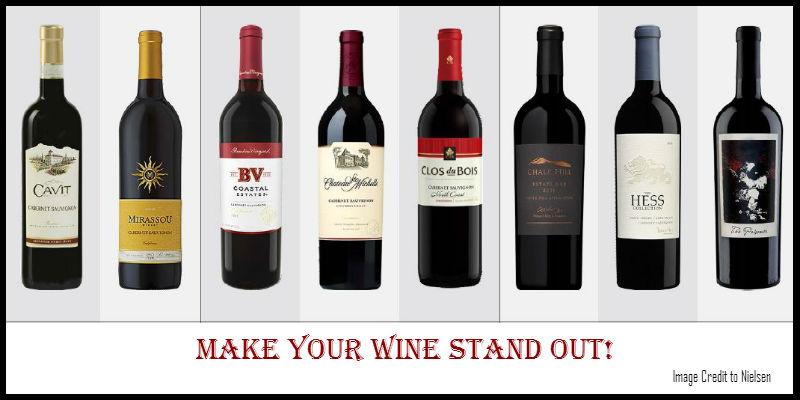
Customer behavior testing can help us design better wine labels. Really.
Wine label design is very personal – every wine brand has a unique story to tell. Often, this has meant that everyone was designing by the ‘seat of their pants’ with no science behind the decisions and no validation of what works. Now, thanks to a December 2015 report by Nielsen, we have actual customer data to give us insight into what catches the eye (*and perhaps, why). This great research paper has comments and insights from individuals, but also scientific data that shows where the human eye goes on the shelf, and how long it stays there. This behavior can change over time, so this study will be repeated in the future, but for now, this data is a golden opportunity to put some science behind the highly emotional process of wine label design.
As we have written before in this post, your labels must be authentic and reflect your true brand values, culture, and be consistent with other parts of your messaging. Don’t just make a massive switch to your label design based on this report – it won’t work.
Instead, take these insights and incorporate them into the overall conversation about your positioning and branding in the market.
Here are the key points:
In addition to gabbing consumers’ attention, the label must also convey certain key messages, points of differentiation from competition, and a distinct personality.
64% of consumers will try a product because the package catches their eye. 41% will continue to buy a product because they like the packaging.
The wine category is crowded. 4,200 new wines were introduced in 2014.
Consumers make most decisions at the retail shelf – the category is fragmented with little brand loyalty.
Media spending is low relative to other commodities, so shelf appeal is even more important.
Package design can also help gain distribution – labels appeal to restaurant owners and wholesale distributors too.
Additional key findings:
To stand out, be colorful and contrarian. The most visible bottles are seen by up to 77% more consumers than less visible ones, according to eye tracking measures.
Distinct personalities drive engagement. Lower price points tend to succeed with casual, fun themes. Higher price points have more uniform design.
Millennials favor bold and breezy. This is particularly true on the lower price points, but also on higher tiers. Younger buyers value tradition less.
There are unclaimed areas in the market. Despite saturation of product, there are open areas to fill. See page 8 of the report for full details.
Images attract attention, but not always positive. Be careful if your central graphic is controversial – the attention may backfire with some consumers.
Colors, shape, typeface, and images make the label. These are the key elements that define a label – use them to your advantage.
The wonderful news for winery brand owners of all sizes is that all these design elements are available to almost everyone now.
The power of digital printing technology has leveled the playing field and allowed brands of all sizes to have a fair shot at gaining the consumers’ attention and winning at the retail shelf. Thank you for trusting Rose City Label with your project.
Please call us today and we will help you translate this research into a winning label that aligns with your authentic brand and builds a deeper connection with your consumers.
Theory and background are important, but now it is time to really begin printing your labels! You need to have the background work done – read more about that in a previous post by clicking here. Once you have laid the foundation and you have a solid brand, it is time to dive into the details of getting your perfect labels printed. Follow the path laid out here, and you will be able to select the correct label technology for your project.
If you believe your new food, beverage, tool or gadget is really going to make people happy or improve their lives, you owe it to the world to get your product out there – don’t keep it to yourself. Go out and make it happen today.
How Complex and How Stable is Your Design?
If you have a full color or photographic design, then digital and conventional printing are both very good options. If your design is more of a classic, simple layout, like a traditional wine label printed with one or two colors, then you will have a cost advantage with traditional press printing – more colors mean more cost on a traditional press. How likely are you to revise your design on the next run? If you aren’t in love with the design, this will lean you toward the digital production option because there are no setup fees and no penalties for changing the design on your future orders. Simple design? Consider traditional press. Very rough, unstable design? Lean toward digital printing.
How many labels can you commit to right now?
The more labels you buy, the cheaper they will be – this is true across all print platforms. Sometimes it makes sense to select a fixed budget – ‘how many labels can I get for $700?’, but sometimes it makes more sense to base the quantity on your sales projections, or your batch quantity for production of your beer, wine, or peanut butter. We never recommend buying more than a year’s supply of labels – buying more than this, generally, won’t lower your cost that much but it will add more risk of wasting labels – in case you move, change ingredients, or decide you want to give your labels a facelift. Depending on the quantity you decide on, smaller quantities generally tend to favor digital production options. The size of the label weighs on this decision too, but in most cases, 50-1000 labels should be printed on our Economy Digital platform, 1,000 to 10,000 labels belong in our Premium Digital department, and initial orders over 10,000 labels run best on our Traditional Press area.
Do you need metallic inks, perforation, special adhesive or other special operations?
Traditional press printing is still 70% of our business, despite the rapid growth of digital. Because of this, we have many more material choices in the traditional press department – both label materials and adhesives. We also have many, many more standard cutting dies available. Metallic inks, inline embossing, perforation, top scoring, and many other special operations are ONLY available on the traditional press. Finally, because the press is so much larger and faster, the very lowest cost labels will always be produced on the traditional printing press in almost all cases.
Do you want to add ‘bling’ like embossing or foil stamping?
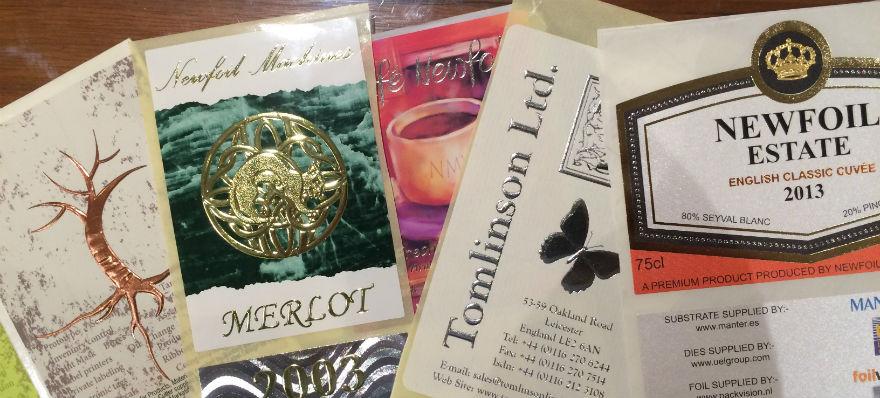
Once you have decided on the primary printing technology, you get to look at the dessert menu. What do you want to add onto the top of the beautiful label you just produced? With our state of the art foil and embossing equipment, we can add a little extra ‘spice’ to any label – regardless of which press technology was used to print it. Embossing and foil stamping make a label ‘pop’ and stand out on the shelf. These secondary operations aren’t for everyone, and they aren’t cheap, but they do give a dimension to your product that you can’t get any other way. Maybe you have a full line of food, beverage, or consumer products? Consider embossing or foil stamping for your top tier product – the Private Reserve level – this will make it stand out, but still remain obviously recognizable as a part of your product family.
That’s It – Go Make it Happen!
Once we have the printing technology selected (Economy Digital, Premium Digital, or Traditional Press) and we have confirmed the need for secondary upgrades (adding the ‘bling’), we are ready to submit an order! All orders are quoted and confirmed within 48 hours. PDF proofs are sent back within 3 business days. After PDF approval, typical lead time is about 7-9 working days. That’s it! Your product is ready to be released to the world – go out and make it happen. If you believe your new food, beverage, tool or gadget is really going to make people happy or improve their lives, you owe it to the world to get your product out there – don’t keep it to yourself. Go out and make it happen today.
More questions? No problem – we can help. Follow this checklist and you will be on your way to making the right decisions, but don’t be afraid to ask for help along the way. We do this every day, so we have many more ideas to help you launch your product with great success.
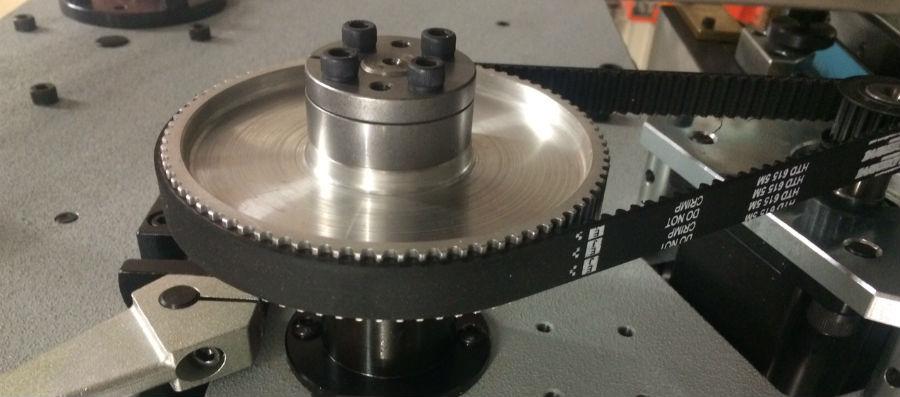
We have some new toys to share this Christmas season! The technology updates and modernization continue throughout our shop with an upgraded Foil Stamp Printing machine. This beautiful new machine is being installed next week with factory training for our two operators. This machine will provide very efficient, accurate foil stamp printing for our customers.
Deep, sculptured embossing for POP on the shelf
Outstanding quality on fine logos, borders, and details
Smaller foil text printing than ever before
Precise registration and accuracy
Excellent coverage for large patches of foil
Foil Stamp Printing adds a touch of class and elegance to your product that no other process can provide.
Selling your product is all about grabbing attention as soon as possible on the retail shelf. Foil stamping is the technique to grab the shopper’s eye.
Embossing enhances this feature even more.
Now we can do both with this state of the art, servo driven machine.
Foil stamp printing can be used to create an entire label for gourmet foods, gift baskets, and specialty seals. It can also be added to another preprinted label. With this second option, you have all the power of our production team working for you on one label – digital or flexo – to create the ideal label for your product.