by admin | Feb 11, 2017 | Beer Wine Spirits, Technical
We Know Complex Prepress Graphics
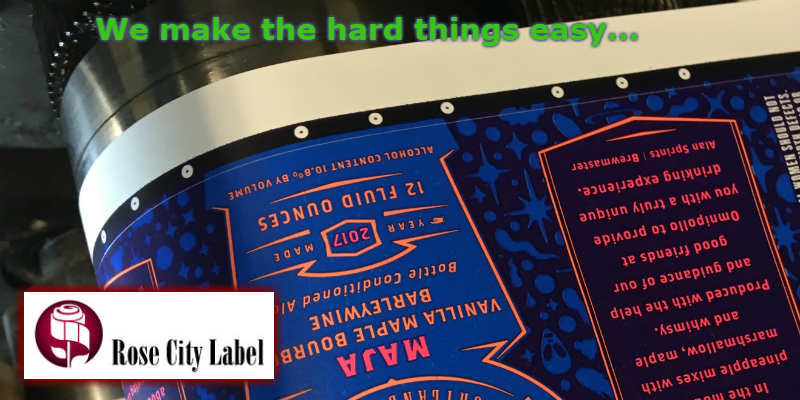
Prepress is the very detailed, vital work that happens between a graphic designer and a printing press. Just having a beautiful design on a computer screen doesn’t ensure it will look beautiful on the printed label. This is where the magic of complex graphics prepress comes in. Prepress includes color correction, image manipulation, trapping, step and repeat, and even spell checking and UPC code verification. It is very complex! Trapping is one major aspect of prepress that was on display with this label. Trapping is the critical adjustment and alignment of adjacent colors, as shown in this graphic. If presses were perfect, we wouldn’t need trapping, but in the real world, we do. Read more about trapping in this previous blog post.

Some Things are Still Better on the Traditional Press
Despite the massive growth of digital printing the past 2 years, we still know that some projects print better on the traditional printing press. We are fortunate to have the depth of understanding to help find exactly the right tool for your job – not just the latest buzz word. In this case, Alan from Hair of the Dog was collaborating with a European designer and they wanted to make a massive impact with their beer and their label. Bright, loud, fluorescent colors were their vision. We could get 80% of their vision – for less money – on the digital press, but they rejected that option. They wanted the best possible display on the bottle – they didn’t want simulated colors. For that effect, traditional press printing with expensive fluorescent inks was required.
Skill Takes Time to Develop
Traditional press printing takes much more complex file preparation. Much of this is done by computer on the newer machines, but for this job we had to rely on our over 30 years of complex graphics prepress expertise. They are true experts at making complex graphics come alive on the printed label. Not all colors are created equally – trapping requires a true ‘vision’ of what each color will look like when it is laid down on the substrate, and how it will look printed next to and over the top of adjacent colors. This experience comes with time – this isn’t the kind of job you learn about in art school. No fear here – just great results for the client.
Details Matter
Pushback is OK. Part of our depth of knowledge is knowing when to push back on design elements that will really NOT work well on press. Because we have the experience and the confidence, we are much more likely to give a professional, well reasoned suggestion to avoid a problem. We have seen train wrecks before – and we don’t like them! When an unprintable design comes in – or one that won’t end up with a pleasing result to the designers – we are ready and willing to put up a cautionary hand. In the end, we are sometimes surprised when our (amazing!) designer clients push us to do something we don’t think we can do, but there is always a healthy, professional discussion to make sure all the options are considered to get the best result. In complex graphics prepress, the details matter.
We Have All The Options
Because we offer very high quality printing in traditional and digital printing, we don’t have an agenda in the decision. We have all the tools and we will educate you to make the best possible decision. Consulting and showing options is always where we start. We consider cost, timeline, finished product quality, visual appeal, durability, and anything else that may be relevant to a particular project. Unlike companies with a more limited equipment lineup, we don’t have to try to fit your project into a narrow window.
Succeed with Us and Sell More Beer!
Ultimately, we don’t succeed unless the customer does. While we love beautiful, complex labels, we love profitable customers even more! Your success is the ultimate measure of our success.

by admin | Dec 13, 2016 | Company News, Environmental Green, Technical
Water Not Solvent
For many years, one of the last remaining chemicals in our shop has been plate making solvent. In order to make high quality photo polymer printing plates, the plate material must be etched away to remove the non-printing area and leave the raised print impression area. In the past this was done with a solvent and a brush, but not anymore.
New Technology – No Chemicals
This week Rose City Label became one of the first shops in the country to install a high quality Water Wash Printing Plate system. This system uses a different type of printing plate than can be etched with just soap and water – no solvent required. This is revolutionary technology that we have been waiting for for many years.
Faster Processing Times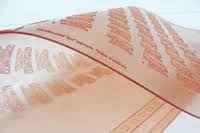
An additional benefit of this new system is a 60% reduction in plate processing times. This means plates are on press faster, with less downtime. This is important for all jobs, but especially new, complex jobs that may require an adjustment on press. Now we can be back up in running in less than one hour! With no solvent to absorb into the plate, there is no need to wait for this solvent to evaporate.
Processing time is cut from 2.5 hours to 55 minutes!
Better Print Quality, too!
 One final, very important benefit of this new system is a better quality printing plate. The detail and the image quality from these plates is superior to any previous plate we have seen. We tried several different technologies before we selected this system, and I am confident that these are the best printing plates that any label company has to offer.
Best Quality – Faster Processing – Earth Friendly
Thank you to all our customers that continue to trust us with their very important label printing jobs. Because of all of you, we are able to invest in the latest technology to grow and build our business. We appreciate everyone that has been with us on this amazing journey. We will continue to grow and innovate as we move forward into the future.
What can we do to help you? Please call us today with any label project – we are here to help.
by admin | Oct 11, 2016 | Technical
When you think about ordering self-stick labels for your product, which type of adhesive to use is probably not the first thing you think about. In most cases, design and artwork are the star of the show when it comes to your product labels. However, without the right label adhesive for your application, it may not have the staying power you need.
Types of Self-Stick Label Adhesives
Adhesive is just a fancy word for glue. And glue is glue, right? Not quite. There are many types of label adhesives, and not all will give you the result you desire.
In addition to your preferences, a lot depends on the surface you’ll be applying your labels to. Depending on the adhesive you choose, your labels can be repositionable or permanent. They can peel away cleanly, or removal can destroy the label.
What to Consider When Selecting a Label Adhesive
You might be surprised at the number of label adhesive options there are to choose from. The best one for your project will depend on a number of factors:
- The surface your labels will adhere to: smooth or textured, rigid or flexible
- The application conditions: hot, cold or moist
- The storage conditions of the product: hot, cold, wet or dry conditions
- The product itself: liquids or oils can dissolve certain adhesives
- The shape of your packaging: tight curves and sharp edges can present a challenge
In addition, you’ll want to decide whether you prefer (in order of stickiness):
- Repositionable/low tack/’post a note’ style
- Removable (these generally become permanent a few days after application, but can be repositioned before the adhesive sets)
- Permanent label adhesive
- Freezer adhesives (to withstand extreme cold without peeling or cracking)
- Aggressive/Ultra Permanent – for our most demanding applications
Rose City Label Knows Adhesives
It’s hard to convey decades of experience in a short blog post. To make things more complicated, not all label materials (paper, foil, clear, textured, etc.) are available with all adhesives. Additionally, our different printing methods can dictate specific adhesive requirements. Give us a call; we’d be happy to discuss your specific application.
For over 80 years, we’ve been producing quality product labels for beverages, foods, personal care products and industrial applications. No two projects have the same goals, and we pride ourselves on finding the best solution for each client’s needs.
Tell us a bit about your product, how it’s stored and used. We know the right questions to ask so we can select the perfect label adhesive for your project. We can even provide you with free, no obligation samples to test on your specific product, just to be sure. Stick with us! (Sorry. We’ll try to keep the adhesive puns to a minimum.)

by admin | Sep 1, 2016 | Beer Wine Spirits, Label News, Technical
With over 600 wineries in Oregon, it’s safe to say that we love our local wines here in the Willamette Valley and the surrounding regions. It’s also safe to say that the competition has become greater as the region’s reputation has grown among wine enthusiasts.
Wine lovers visiting your tasting room can use all their senses to select their favorite variety and vintage. However, most consumers have only their eyes to go by. This makes an eye-catching, durable label one of the best things you can do for your bottles. (On the outside, at least.)
Choosing a Stock for Wine Labels
Textured paper is a classic choice for labeling wine bottles. A bit of texture gives consumers a way to literally feel the passion and effort that’s gone into your product. Wine lovers like to use all their senses, so choosing a textured stock makes perfect sense.
Water resistance is also a concern, particularly for wines that are best served chilled. Thankfully, we’ve got years of experience with coatings and adhesives that will hold up even to an evening of being plunged in and out of an ice bucket.
Digital Printing for Wine Labels
Historically, the setup costs associated with producing a new label has left wineries with a choice: order new plates each year, or find some less efficient (and less attractive) way to distinguish one year’s bottling from previous harvests. Thankfully, our high-quality digital presses make changing the vintage (or any data on your label) as easy as typing it on a keyboard.
Skipping the setup costs and delay each year translates to real savings for any winery, large or small. Additionally, digital printing allows us to greatly reduce lead times. A new line, a logo change, adding a QR code, even a full redesign no longer means waiting months for delivery of your finished labels.
Wine Labels for Special Events
Does your winery produce special bottlings for weddings, openings, retreats and other special events? Imagine being able to offer a custom, personalized label as a value-added service. With digital wine label printing, we can produce as few or as many as you need, at a price point you’ll find attractive. We relish the opportunity to help you delight your customers.
by admin | May 17, 2016 | Label Design, Technical
Arguably one of the most versatile aspects of our HP Indigo Digital Offset press is the ability to use white ink. On a reflective or holographic stock, white ink opens up a world of possibilities for your label. While colored inks tint the reflective stock, retaining its “shiny” look, white ink is opaque—covering the stock like a coat of paint.
What does this mean? Well, one of the drawbacks to the digital press is that you can’t work with metallic inks. However, if you have your sights set on a reflective detail for your labels, a bit of reversal can deliver this dramatic look.
Instead of using metallic ink on matte stock, you can begin with a shiny or iridescent stock. Colored inks will tint the stock for a bright gleam in any hue you could desire. Meanwhile, mixing white ink with color—or using white ink alone—will block out portions of the reflective nature of your stock. To the observer, the shiny bits will pop against a matte background.
The effect is that of reflective ink on matte stock, although in reality the reverse is true. But we won’t tell if you won’t!
White Ink Adds Versatility
The versatility afforded by using opaque white on the digital press is vast. Shiny, reflective stocks are nice, but in many cases, they make smaller fonts difficult to read. Often, a label that is 100 percent reflective lacks visual interest. This rather defeats the purpose of using “shiny” to draw attention to your brand.
Therefore, the ability to use both opaque and translucent colors over a reflective stock adds greatly to the appeal of choosing the digital press. Your project may be a short run, perhaps for a new, experimental or promotional product. Or maybe you need sequential or otherwise variable data. Projects such as these are ideally suited to digital printing.
Cohesive Look Between Print Methods
In the past, you’d have had to give up all hope of metallic, shiny or reflective details when choosing digital. If your existing brand logo makes use of reflective ink, you would be limited to the traditional press for each project. This could make a limited edition or other short run project somewhat cost prohibitive, as the plates and other setup expenses are the same whether you need 100 labels or 10,000.
By making use of white ink, you can add an occasional short, digital run of special labels to your existing product line without sacrificing the look your customers have grown accustomed to. As you know, maintaining a cohesive look is important for brand recognition. White ink enables us to give you the metallic look you desire in spite of the limitations to available ink colors on the digital press.
At Rose City Label, we enjoy using innovative solutions such as white ink to tackle the challenges our clients face in a competitive marketplace. Whatever your labeling challenges may be, we welcome the opportunity to find the perfect—and most cost-effective—solution for your product line. Get in touch today and let’s talk about how to make your vision a reality.
by admin | May 3, 2016 | Technical
Having the right backing paper is critical to your label project success
If you are just doing a very small run, hand applied label, then your backing paper probably doesn’t matter. If you are using any type of automated application, or you may want to use automated application in the future, then the backing paper is critical.
Begin with the End in Mind
Knowing exactly how you will get the labels onto your box, bag, or bottle will help you select the right backing paper. If you have a table top label machine, or a bottling line, your equipment should have a preferred type of backing paper. If you use a contract (mobile) bottler, then it is especially important to have a clear understanding of the proper backing paper for their equipment so you have a smooth, productive day of bottling.
What are my Options?
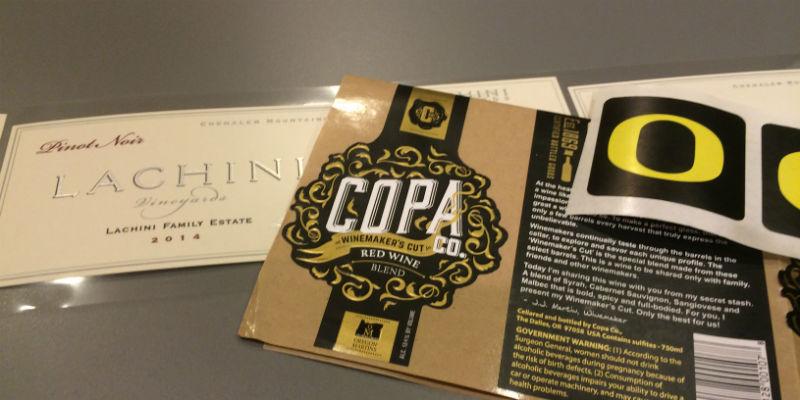
These are the choices for backing paper – 40# (white) backing, 44# (brown) backing, and 1.2 mil PET (clear) backing.
- 40# White – this is most common for food labels and some beverage applications. It is thin and light and works pretty well in most applications. ** Shown above on the Oregon Ducks label. NOTE – their is also a 50# White backing that is very common in the Craft Beer market – it looks just like the 40# above, but more durable.
- 44# PK (poly coated Kraft) Brown – this is most popular in the wine industry. This is slightly thicker and the heavy poly coating can help the labels release better on a bottling line. ** Shown above on the Copa Di Vino label.
- 1.2 mil Clear PET – this polyester liner is thinner and has higher tensile strength than the other two. Some mobile bottlers insist on this option for all wine labels. ** Shown above on the Lachini wine label.
But wait, there’s more!
You can’t just pick the label backing by itself – it isn’t just something you pick off the menu. Label materials consist of a face stock (the label itself), adhesive (the glue) and the backing (the label liner we are discussing). Unfortunately, not every face stock is available with every adhesive and every liner – you will generally have to pick and chose between recommended combinations unless you are placing a very, very large label order that will justify a custom material run.
Finally – don’t forget the Cutting Die
Besides compatibility with the application equipment, your label stock (and especially the backing), need to be compatible with the cutting die that will be cutting the labels to their final shape. Cutting dies are precision machined to cut to a particular depth – these are some times called ‘kiss cutting’ dies because they just cut through the face (label itself) and should just barely touch (or kiss) the backing paper. If the cutting die cuts too deep, you will have serious problems on the application line. Of course if it doesn’t cut deep enough, you will not have finished labels in the proper shape – so having a die that is compatible with the material you select is critical.
For this reason, our cutting dies are all specifically calibrated or the backing material they cut – you can’t pick a proper die until you have your material selected.
Sound Confusing?
If all these options make your head hurt, don’t worry. We do this every day and we are happy to help. We can break it down for you and take the mystery out of label materials, backing paper, and cutting dies. You concentrate on making your sauce, wine, fudge, or beer – we will handle the labels.
