by admin | Feb 28, 2013 | Customers/Examples, Technical
In a recent national survey, InfoTrends asked label, carton and packaging printers what was driving the move to digital printing. Their answers were a good insight into the future of printing, and they reinforce the moves Rose City Label has made into digital printing:
- Customers want to implement lower inventory levels to support lean manufacturing programs
- Customers want to focus and specialize their labels to fit specific markets
These two driving forces are moving us to faster lead times and shorter runs – which are two of the main things that digital does best. Why does digital printing work so well for short runs?
- Faster change over between items
- Lower material setup and waste between jobs and between items
If this sounds like the type of order pattern you will be requesting in the future, please call us today to find out more about digital printing. Conventional printing is still alive and well – and better for many types of labels, but digital is growing! Call us today!
by admin | Jan 18, 2013 | Technical
The answer, of course, is that it depends. It depends on what you are printing and what your expectations are. First, let’s define the terms and explain what each color system really is, then we can discuss why one would be better than another for a particular job.
Spot Colors – PMS Colors – Pantone Colors
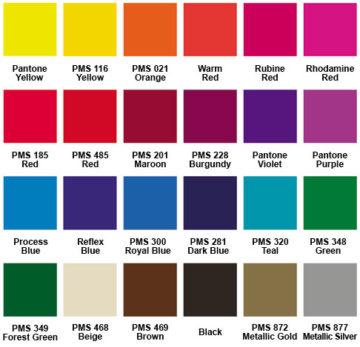
Pantone Colors
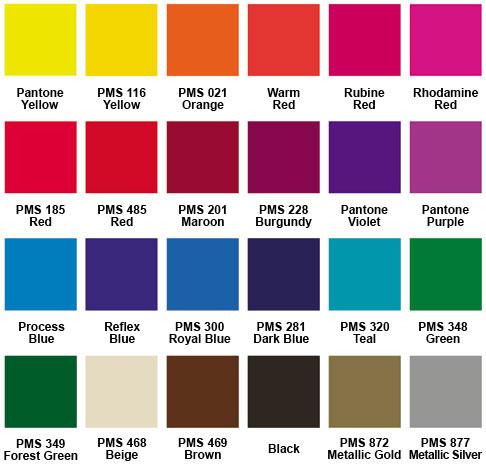
These are all names for the same thing. In this color system, each print station in the press is loaded with a specific color that you specify. The Pantone Matching System (PMS Color) is very widely used in the printing industry. The Pantone color book is much like a paint color swatch book that you would get when you are painting your house. Each color is specified by a 3 or 4 digit number.
This system works very well in many cases because it allows precise control of each graphic element. If you have a very specific logo color like ‘Nike Orange’ or ‘Coca-Cola Red’ you would almost always get the best results if this element is run as a Spot color so it can be controlled independent of the rest of the design.
Most of the PMS colors can also be ‘built’ from the 4 primary colors using the CMYK color system, which is discussed below, but this isn’t always the best option:
– Small colored text or logos that are build of of 4 colors can appear fuzzy
– Color can only be adjusted for the whole label – it all has to be made lighter, darker, more yellow, etc
– Many designs are less expensive with 1,2, or 3 PMS colors than with CMYK color
4 Color Process – CMYK – Full Color

CMYK Color
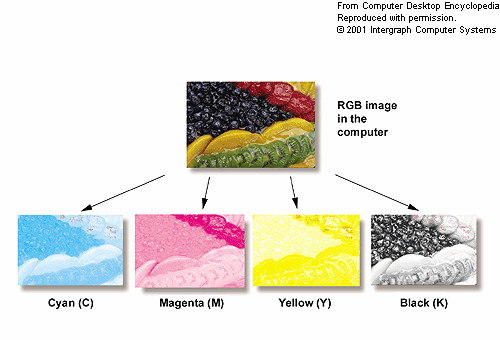
In the CMYK color system, all colors and shades in the image are built out of 4 primary colors – Cyan, Magenta, Yellow, and blacK – this is where the term CMYK comes from. Unlike the PMS color system, where each element of a design is printed in its own color station, and each element can be controlled individually, with this color system, everything on the label is printed using the same 4 inks.
The advantage here is that this is the only way to represent the thousands of colors and tones found in a color photograph, and in some cases, many spot color elements and logos can be created using only the 4 process colors.
– This is the only way to reproduce a full color photo
– Sometimes this allows you to print more spot colors than with the PMS color system
– Often CMYK is used for a photograph AND PMS colors are also used for text or a logo on the same label
Summary
At Rose City Label, you have the best of both worlds. We have two 6 color presses, and one 8 color press. These allow you to print CMYK for your full color photograph, plus a gloss or matte UV varnish, and one to three additional spot (PMS) colors. Another note to keep in mind – nearly all digital printing presses use only the CMYK color system – not PMS spot colors. This allows digital presses to reproduce almost all colors in the PMS book, but some colors are more difficult to reproduce accurately – especially orange, green, and purple tones.
Which color system is right for your label? It all depends — please call us today and we will be happy to help you.
by admin | Jan 7, 2013 | Technical
Every once in a while, we are asked about providing ink ‘drawdowns’ for customers. These are common in the world of Offset printing, but not in the world of flexographic label printing. Because of the way a label press transfers the ink to the plate (and then to the paper), it is virtually impossible to replicate this process in the ink room (or anyplace else but on a printing press).
To ensure customers get exactly the color they want, we always offer a no-charge press check for anyone that wants it. This is very helpful on complicated labels that have not been run before, or on jobs where you don’t quite know what you want. If you can’t decide on the exact PMS color for your label, a press check may be a good solution.
Another option we offer is a color sample printed on press. This takes time because we have to work it in between other ‘live’ jobs on press, so it isn’t always practical for jobs with a tight timeline, but it is a good way to see how your color will look on the actual label stock you have chosen.
For those that are curious about the technical aspects of putting ink on paper, we offer the following images:
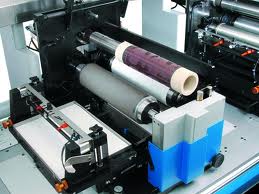
This is a print station on a flexographic label press. The gray roller is called an ANILOX ROLL and it is what actually pulls the ink from the ink pan and transfers it onto the printing plate (the darker, brown/purple cylinder above the anilox roll). We have various anilox rolls that deliver different amounts of ink to the plate – changing these rollers to others that deliver more or less ink is the primary way we adjust color on press. This is generally more exact and repeatable than altering the ink at press. When we document the anilox roller used on each color station, and the ink used, we can always be sure that we can repeat the job again and again with very consistent results.

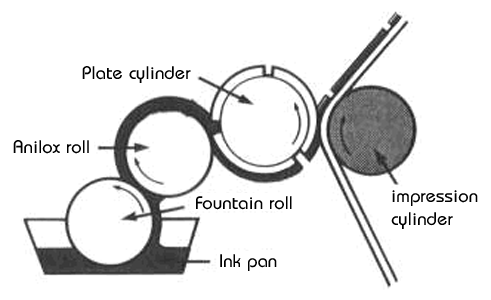
Here is another diagram showing the same thing. The anilox takes the ink from the pan (or the fountain roll) and delivers it onto the plate in the precise amount required to print the ink density you need.
If you have questions about anilox rolls, or any other technical aspect of label printing, please call us today.
by admin | Nov 16, 2012 | Customers/Examples, Technical
This is a great example of a customer that was willing to work with us to make her labels run as efficiently as possible on press. By making slight changes, without compromising the design intent, we were able to create a beautiful label that was a joy to print. Making your design press-friendly allows the job to run faster, with less waste. This means less waste in the landfill, and a lower price for the customer.
We are lucky to work with many talented designers that aren’t afraid to take our suggestions.
Before and After
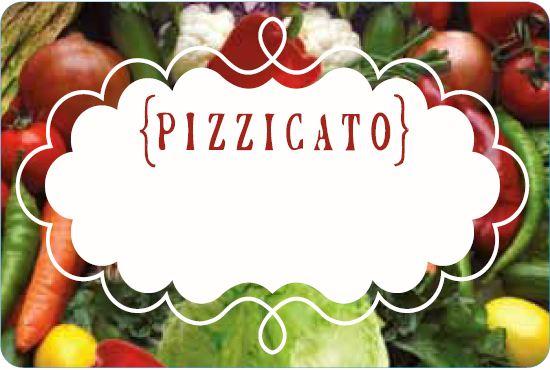
One of the hardest things to do on a label press is to reverse (or knock out) text and images from a 4C photo. On the left, the swirly white border is actually made by NOT printing any ink in that area – the ink is removed to reveal the white paper underneath. The problem with this is that if one of the 4 colors (Cyan, Magenta, Yellow, and blacK – CMYK) are slightly out of alignment, that beautiful border looks fuzzy. On a long press run like this, there will always be some slight movement, which requires much more attention from the press operator, more waste, and ultimately a more expensive, lower quality label.
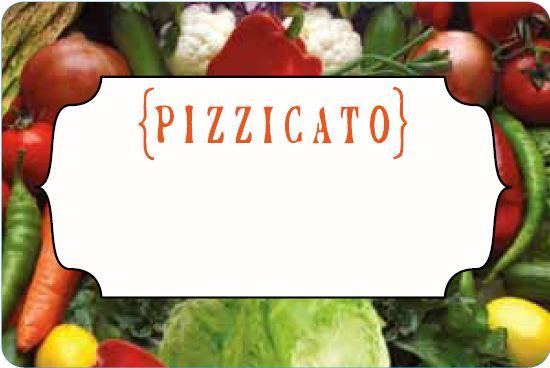
On the Right, the design is much better for printing. The white border is replaced with a black key-line around the interior of the image to define the edge and also to cover up or ‘trap’ any slight movement in the 4CP image surrounding it. Further, we were able to replace the red PIZZICATO text with the company logo color, orange. This color was already in use on press on a third label in this series, so using this color saved the cost of an additional plate and kept the series of labels more consistent.
Before and After
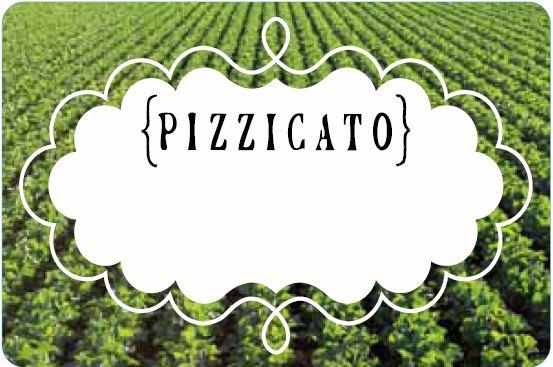
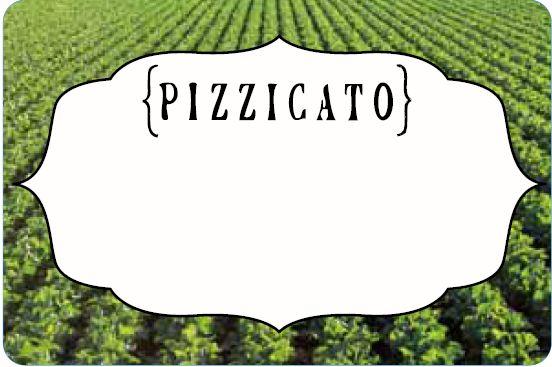
The same general design changes were applied to this label as well. The job ran perfectly on press, and the customer was pleased with the cost effective, high quality label we produced.
If you want solid advice on how to bring your label vision to reality, in the most efficient, cost effective, and environmentally friendly way, please call us today.
Let our more than 190 years of combined experience work for you!
by admin | Nov 2, 2012 | Company News, Technical
 Training is complete, the factory reps have all gone home, and we have had a great month in October!
Thank you all for your support as we made these major upgrades to our prepress and plate making equipment.
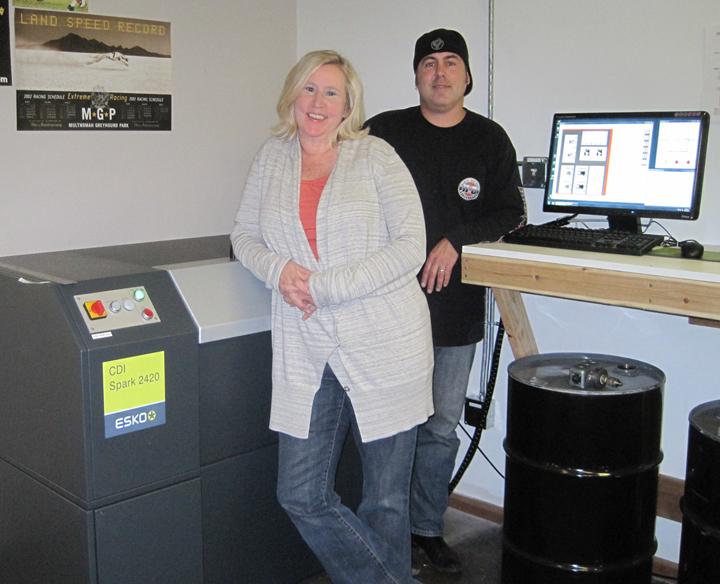
This photo shows John and Lisa, who do most of the heavy lifting with this equipment. Together they have almost 40 years of experience here at Rose City Label, and they were both very critical to implementing these changes. Despite the many, many hours we spent in October with training, testing and calibrating the new equipment, we still managed to have the best October in the history of our company, and one of the top 10 best months of all time.
Thank you so much for your patience and for trusting us with your labels.
Please call us today, or refer a friend to us, if there is any way that we can help.
by admin | Oct 18, 2012 | Company News, Technical
Good things are happening at Rose City Label as we install a new state of the art pre-press software and plate making system. This sophisticated system takes your art files and makes all the necessary changes and calibrations to ensure you get the finest quality printing plates.
Here are the benefits for you:
- Better Quality Printing Plates – more vivid, detailed color images
- In House Control – faster turn around time on new orders
- Better Proofing Technology – more accurate color proofs, more accurate replication on press
- More Eco Friendly – eliminates film, developer, and all related chemistry
During October, we have been very busy installing the machines, wiring and networking them together, and getting extensive factory training on how to use the software and hardware. We have always made most of our plates in-house, but over the past few years as the demand for very high quality full color printing has increased, we have chosen to outsource our most demanding plate work. Now we will have the equipment in our own building and be able to provide better quality plates faster than ever!
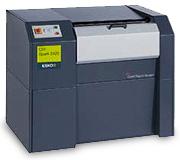
Thank you for your patience this month as we go through this very extensive training and calibration process. We are scientifically calibrating our color proofs, plates, and printed labels to make sure we can provide even better quality in the future!